
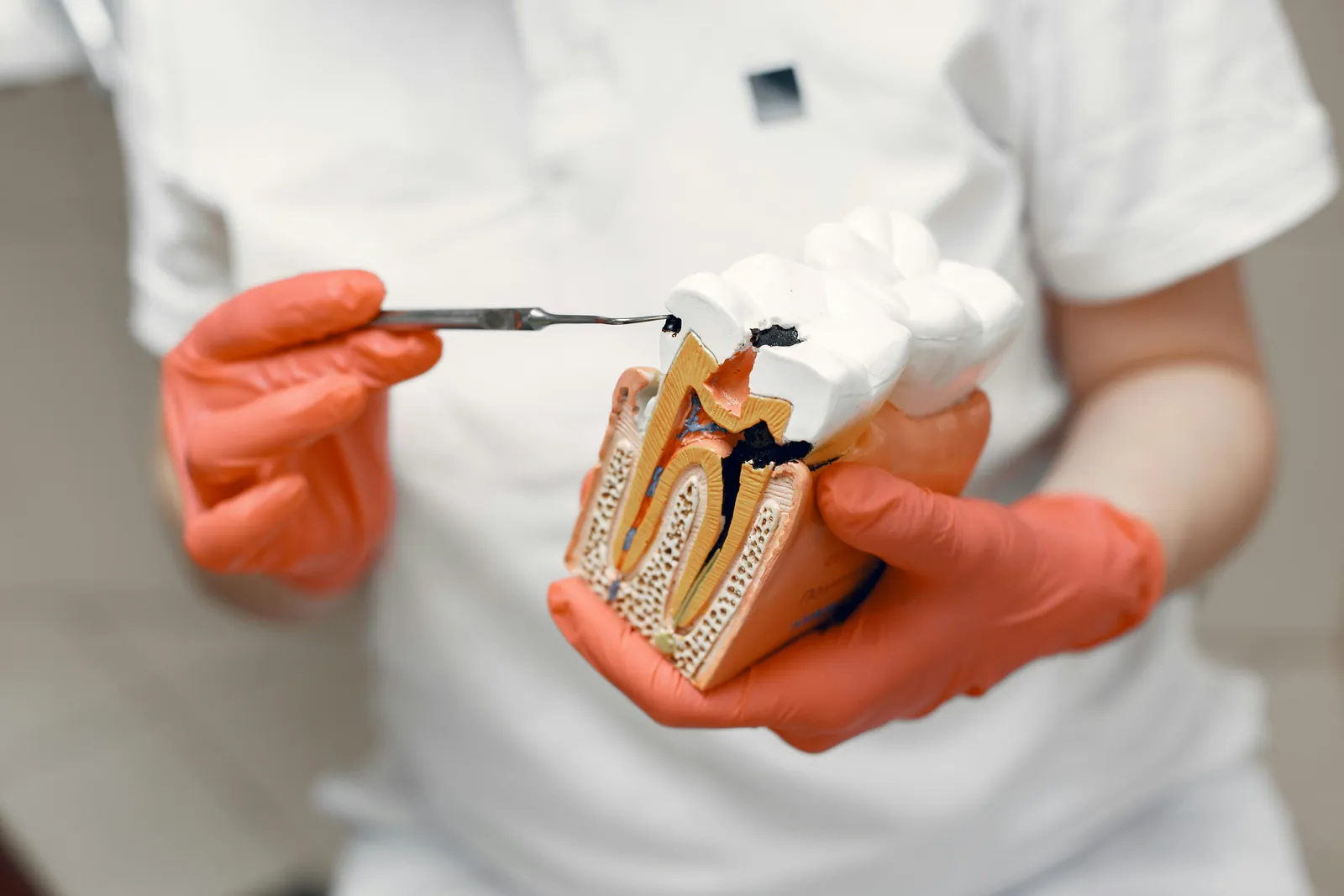
Inside every tooth is the pulp, soft tissue that contains nerves and blood vessels. When deep decay, a crack, or an injury lets bacteria reach the pulp, it can become inflamed or infected. That often causes pain, and without treatment the infection can spread.
A root canal removes the damaged pulp, cleans and seals the inside of the tooth, and lets you keep your natural tooth instead of having it removed. Despite their reputation, root canals are a routine procedure, and many patients say the treatment feels similar to getting a filling.
Good to know
- Visits
- Often one or two appointments
- Comfort
- The tooth is numbed; most patients feel pressure, not pain
- Insurance
- Many PPO plans cover part
Signs you might need a root canal
Not every infected tooth causes symptoms, which is one reason regular exams matter. When symptoms do appear, they can include:
- A lingering toothache, especially when chewing or biting
- Sensitivity to hot or cold that lasts after the food or drink is gone
- Swelling or tenderness in the gums near a tooth
- A small bump on the gum that may drain
- A tooth that has darkened in color
What causes the pulp to become infected?
The most common cause is deep decay that has worked its way through the outer layers of the tooth. Cracks or chips, repeated dental work on the same tooth, and injuries from a blow to the mouth can also let bacteria in or damage the pulp, sometimes without any visible change to the tooth.
Your dentist will examine the tooth, take X-rays, and may test how it responds to temperature or tapping to decide whether a root canal is the right treatment.
What happens during treatment
The tooth is numbed thoroughly before treatment begins. A small opening is made in the top of the tooth, the infected or inflamed pulp is removed, and the canals inside the roots are cleaned and shaped. The canals are then filled and sealed to help keep bacteria out.
Depending on the tooth and the infection, treatment may be completed in one visit or spread over two. If dental visits make you nervous, ask about our sedation dentistry options.
Protecting the tooth afterward
A tooth that has had a root canal can become more brittle over time, especially a back tooth that takes heavy chewing forces. Your dentist will often recommend a dental crown to cover and protect it. Until your final restoration is placed, avoid chewing hard foods on that side.
Some tenderness for a few days after treatment is normal and usually eases with over-the-counter pain relievers. Call us if pain or swelling gets worse instead of better.
Why saving your natural tooth matters
Keeping your own tooth helps maintain your bite and prevents neighboring teeth from shifting. If a tooth can't be saved, replacing it with an implant or bridge is often more involved than treating it with a root canal. If you're in pain right now, see our emergency dental care page.
Questions
Root Canal Treatment: frequently asked questions
Is a root canal painful?
How long does a root canal take?
Do I need a crown after a root canal?
What happens if I don't get a root canal?
Does insurance cover root canals?
From our blog
- Sedation Dentistry: What It Is, How It Works, and Who It's For
Relax, Feel Comfortable, and Get the Dental Care You Need—Without the Stress