
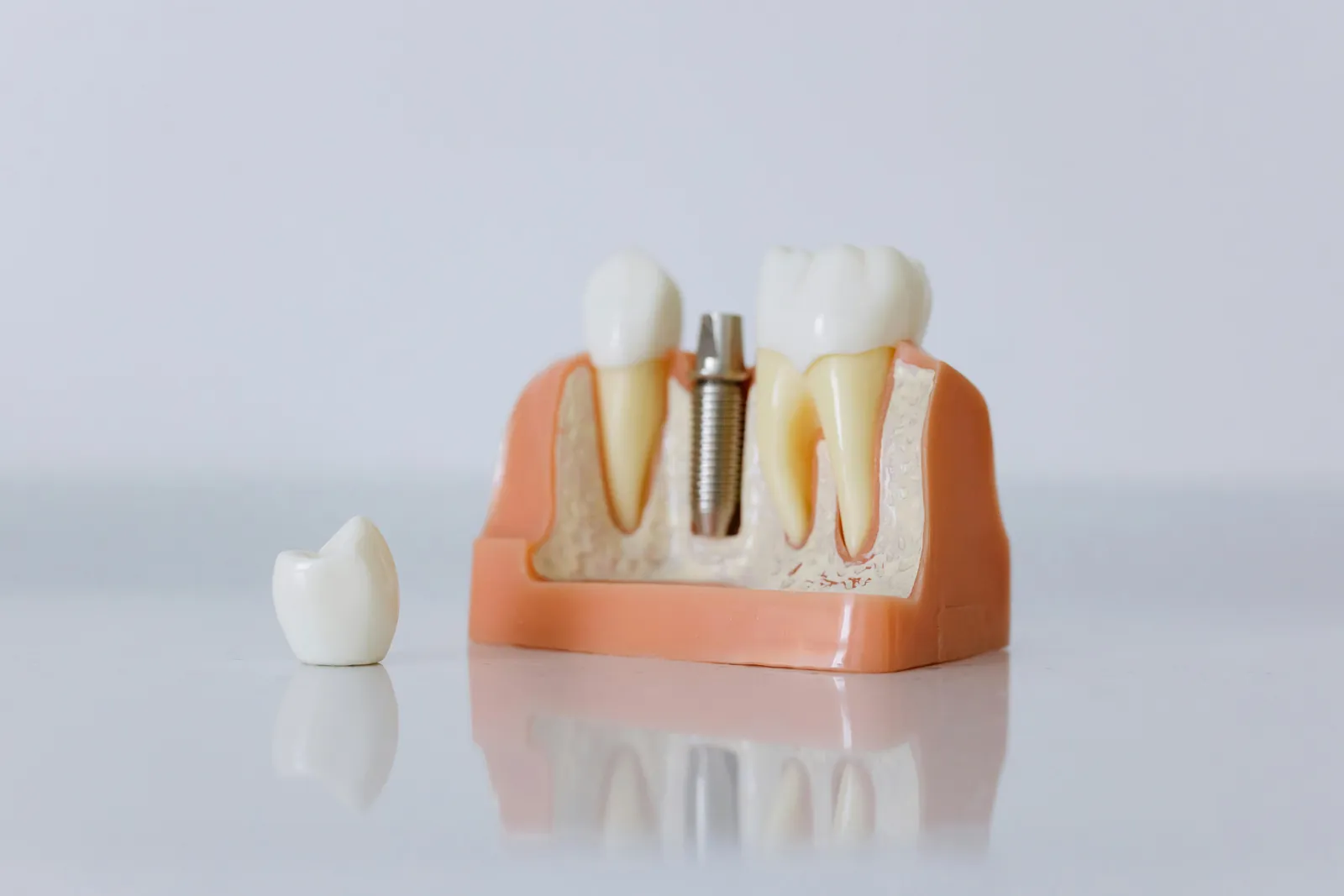
Dental implants are one of the most stable ways to replace missing teeth. Unlike removable dentures, an implant-supported tooth stays fixed in place, so you can bite, chew, and smile with confidence.
An implant has two main parts: the implant itself, a small post placed in the jawbone that acts like a tooth root, and the restoration, the visible tooth or teeth attached on top. At Smile Innovations of Fairfield, our dentists design and place the restorations that complete your implant treatment, and will discuss your full treatment plan with you, including implant placement.
Good to know
- Lasts
- Many years with good home care and checkups
- Insurance
- Varies; some PPO plans cover part of the restoration
Ways implants can replace teeth
Implants are versatile. Depending on how many teeth are missing, your restoration may be:
- An implant crown to replace a single missing tooth without reshaping the neighboring teeth
- An implant-supported bridge to replace several teeth in a row using a few implants as anchors
- An implant-supported denture that attaches to implants for much better stability than a traditional denture
Why patients choose implants
Implants are often recommended because they look and function much like natural teeth. Because the implant sits in the jawbone, it can help preserve bone that would otherwise shrink after a tooth is lost. Unlike a traditional dental bridge, an implant crown doesn't rely on the neighboring teeth for support, and unlike dentures, it doesn't need to be removed for cleaning.
Implants aren't the right fit for everyone. Healthy gums and enough bone to support the implant are important, and some health conditions and smoking can affect healing. Your dentist will review your health history and talk through every option, including bridges and dentures.
What the process looks like
Implant treatment happens in stages over several months. After an exam and planning, the implant is placed and given time to heal and bond with the bone. Once healed, an impression or scan is taken so your custom crown, bridge, or denture can be made to match your smile. Finally, the restoration is attached and your bite is checked.
If a damaged tooth needs to be removed first, that step is planned as part of your treatment. See tooth extractions to learn what to expect.
Caring for your implant
Implant restorations can't get cavities, but the gums and bone around them can still become inflamed if plaque builds up. Brush twice a day, clean between teeth daily, and keep up with regular cleanings and exams so we can monitor the implant and the tissue around it.
Planning your treatment with us
Every implant case starts with a conversation. We'll ask about your goals, review your dental and medical history, and examine the area where a tooth is missing. From there your dentist will explain the steps involved, the expected timeline, and how the restoration on top of your implant will be designed to match your natural teeth.
If you're comparing options, we're happy to walk you through implants, bridges, and dentures side by side so you can make a decision you feel good about.
Questions
Dental Implant Restoration: frequently asked questions
How long do dental implants last?
Does implant treatment hurt?
Am I a candidate for dental implants?
Should I choose an implant or a bridge?
Does insurance cover dental implants?
From our blog
- Dental Implant vs. Bridge: Which Is Better?
Understanding the Pros, Cons, and Key Differences to Help You Choose the Right Tooth Replacement