
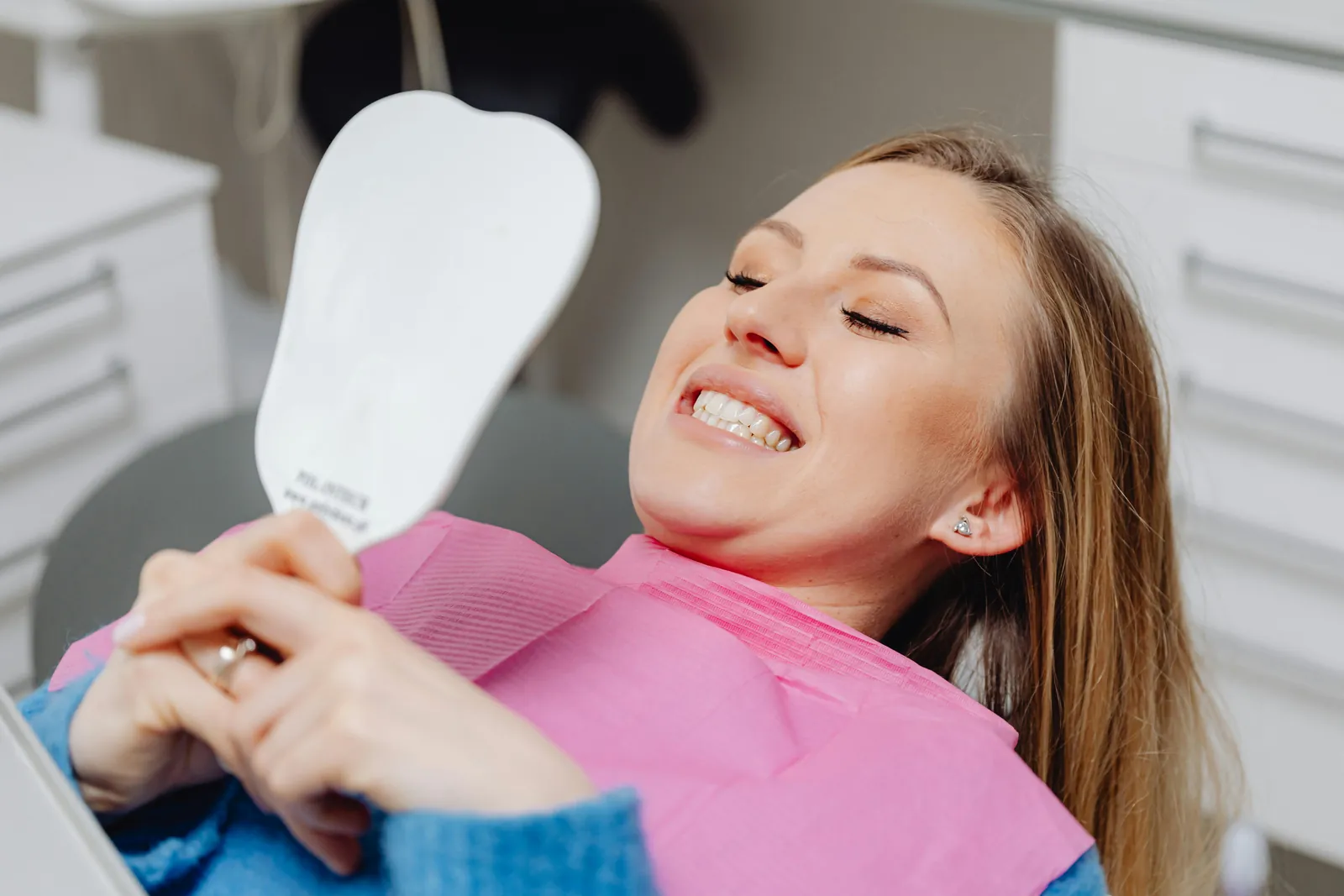
Teeth naturally pick up stains over time. Coffee, tea, red wine, tobacco, and simply getting older can all leave your smile looking duller than you'd like. Professional teeth whitening is one of the simplest ways to brighten your smile.
At Smile Innovations of Fairfield, whitening starts with an exam to make sure your teeth and gums are healthy and that whitening is likely to give you the results you're hoping for.
Good to know
- Sensitivity
- Sometimes temporary; it usually goes away on its own
- Results
- Last longer with good home care and occasional touch-ups
What causes tooth discoloration?
Stains generally fall into two groups. Surface (extrinsic) stains come from foods, drinks, and tobacco and usually respond well to whitening. Deeper (intrinsic) discoloration can come from certain medications, injury to a tooth, or changes in the tooth's structure, and may not respond as well to whitening alone.
It's also important to know that whitening only changes the color of natural tooth enamel. Fillings, crowns, and veneers will not change shade, so we'll talk about how any existing dental work fits into your plan.
Why choose professional whitening?
Over-the-counter products can help with light surface stains, but professional whitening is supervised by your dentist and tailored to your teeth. Benefits include:
- An exam first, so cavities or gum problems are addressed before whitening
- Guidance on what results are realistic for your teeth
- Professional-strength products used under your dentist's direction
- Help managing sensitivity if it comes up
What to expect
Your dentist will review your goals, note your current shade, and recommend a whitening approach that suits your teeth. A professional cleaning beforehand removes surface buildup so the whitening product can work evenly. If you're due, you can combine whitening with your regular cleaning and exam.
Results vary from person to person, and some teeth lighten more than others, so your dentist will help you set realistic expectations before you begin. Some people notice temporary tooth sensitivity during or shortly after whitening. It usually fades on its own, and your dentist can suggest ways to keep you comfortable.
Keeping your smile bright
Whitening results are not permanent, but you can help them last longer by:
- Rinsing with water after coffee, tea, or red wine
- Brushing twice a day and flossing daily
- Avoiding tobacco
- Keeping up with regular professional cleanings
- Asking about periodic touch-ups
Is whitening right for you?
Whitening works best for people with healthy teeth and gums whose discoloration comes mainly from surface staining. It may not be recommended if you have untreated cavities, gum disease, worn enamel, or significant sensitivity, and it's generally postponed during pregnancy. Your dentist will let you know if whitening is a good fit or if another option would serve you better.
If you're planning other cosmetic work, such as veneers or new crowns, it's usually best to whiten first. That way your new restorations can be matched to your brighter natural shade.
Questions
Teeth Whitening: frequently asked questions
Is teeth whitening safe?
Will whitening make my teeth sensitive?
How long do whitening results last?
Will whitening work on my crowns or fillings?
What if whitening doesn't remove my stains?
From our blog
- How Often Should I Get a Dental Cleaning? A Complete Guide
It Depends On Your Oral Health But The Answer May Surprise You!